

Academics and Forestry Leaders Discuss the Future Direction of Indonesia's Forestry Law Revision at INSTIPER
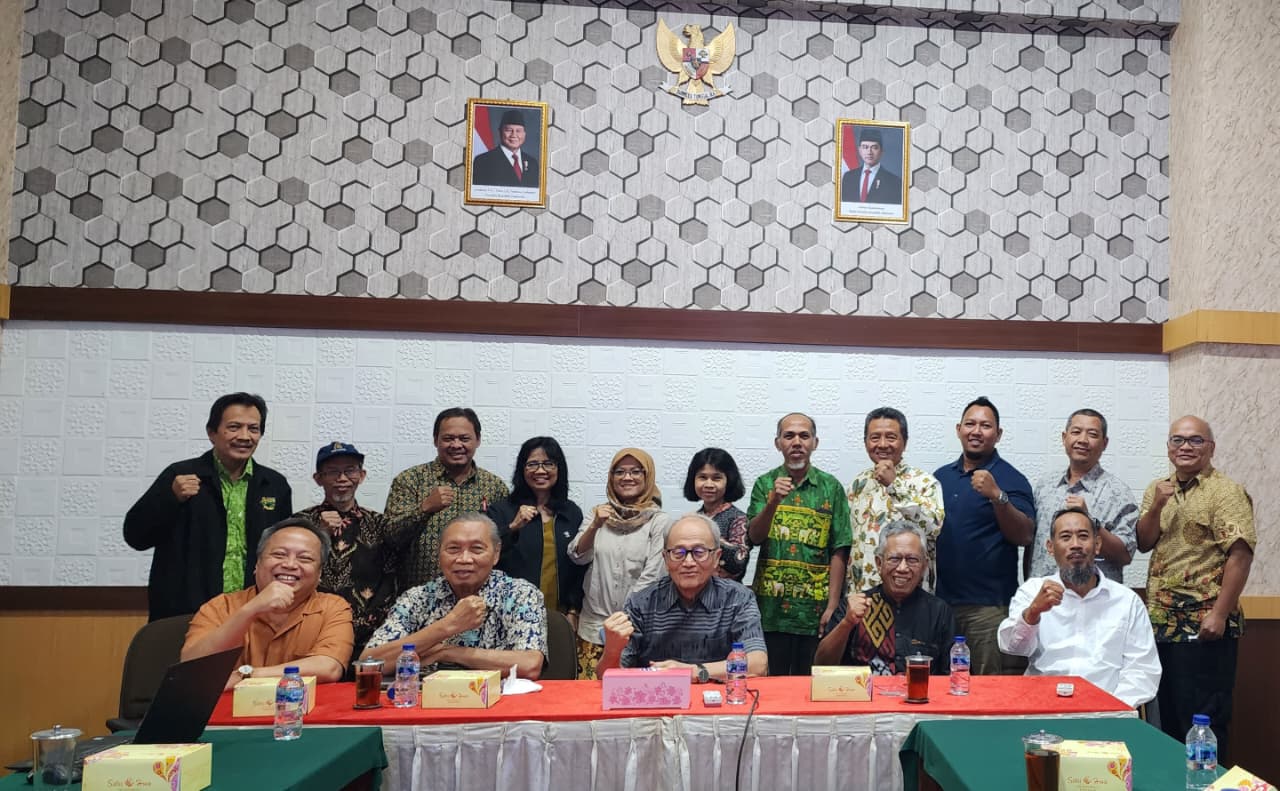
Yogyakarta, 10 July 2026 – The Center for Sustainable Landscape Science (PSLB) at INSTIPER Yogyakarta, with the support of Forest for Life (FFL) Indonesia, convened an academic forum to discuss the future direction of the revision of Law No. 41 of 1999 on Forestry. The forum provided a platform for academics and senior forestry leaders to formulate strategic recommendations for strengthening Indonesia's forest governance in response to emerging environmental, social, and economic challenges.
The discussion was moderated by the Director of the Center for Sustainable Landscape Science (PSLB) and brought together academics from various disciplines within INSTIPER, alongside distinguished senior forestry experts with extensive experience in forestry policy formulation and forest management practices across Indonesia.
Participants emphasized that the revision of the Forestry Law should not merely focus on improving legal provisions. Instead, it should serve as a strategic opportunity to transform Indonesia's forest governance paradigm, making it more adaptive to the challenges of climate change, biodiversity conservation, the development of a sustainable bioeconomy, and the improvement of livelihoods for communities living within and around forest landscapes.
Several strategic issues emerged during the discussion. These included strengthening the role of forests as life-support systems; harmonizing the Forestry Law with more recent national legislation; reinforcing collaborative governance (co-government) approaches; refining the legal recognition of ecosystem services; enhancing policy implementation at the field level; and developing more comprehensive methods to assess the ecological, social, and economic values generated by forests.
The forum also highlighted the importance of strengthening economic incentives within the forestry sector through broader recognition of ecosystem services. Participants noted that many of the benefits provided by forests—including watershed protection, carbon sequestration, biodiversity conservation, and disaster risk reduction—remain insufficiently reflected in current forestry financing and investment mechanisms.
Participants agreed that the legislative revision should be supported by a robust academic paper grounded in scientific evidence and capable of addressing the increasingly complex dynamics of forest governance in Indonesia. Harmonization with other sectoral regulations and the formulation of more operational legal provisions were also considered essential to reduce ambiguity and improve policy implementation.
The Director of PSLB INSTIPER emphasized that universities have a critical responsibility to provide independent, evidence-based, and constructive scientific input to support public policy development. Through academic forums such as this, PSLB remains committed to serving as a platform that brings together researchers, practitioners, and policymakers to generate practical recommendations that contribute to sustainable forest governance.
The discussion is expected to mark the beginning of a broader series of scientific studies aimed at supporting the refinement of Indonesia's Forestry Law while reinforcing the country's commitment to developing forest governance that is adaptive, equitable, and sustainable.